DIRECTOR OF ENGINEERING // DISTRIBUTED SYSTEMS // PLATFORM OPERATIONS
Clint Crocker
The fastest way to deliver software wasn't building applications. It was eliminating the infrastructure problems every application kept repeating.
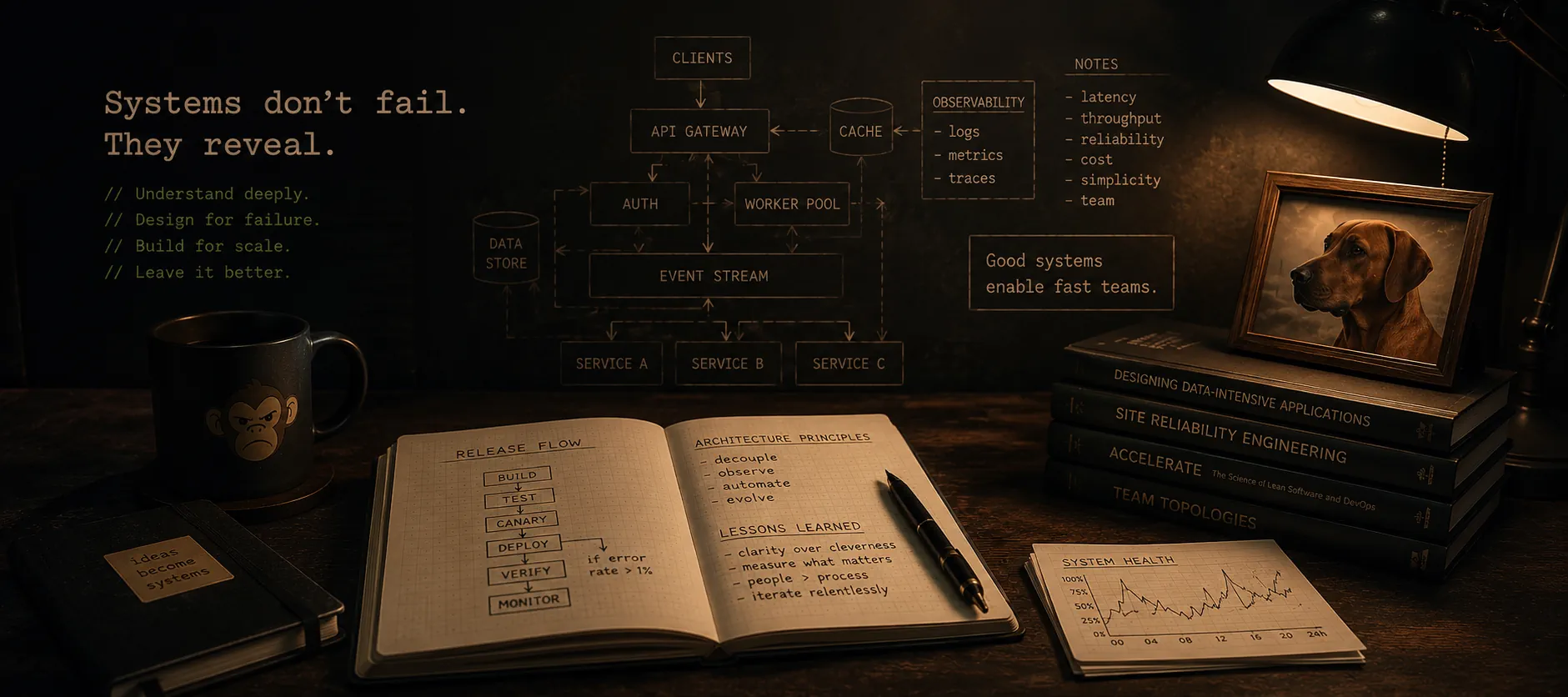
I’ve spent most of my career building systems that have to work in the real world—where downtime costs money and edge cases are just normal operations.
Most of that work has lived inside complex, high-stakes environments—distributed systems, legacy constraints, and real operational pressure. I’ve led teams through modernization efforts, reduced infrastructure costs without slowing delivery, and built systems that continue to scale long after I’ve stepped back from them.
I stay close enough to the systems to make the hard technical tradeoffs when they matter—but my focus is building teams that can do that without me.
At the end of the day, I just want to build great teams and ship products people actually love using.
GeekSuite was designed to eliminate duplicated infrastructure concerns across a growing collection of applications. By centralizing authentication, databases, monitoring, and AI services, application layers remain thin and domain-focused.
- Authentication & Security
- User Management & Database
- Common AI Integration Layer
- Deployment Automation
- Unified Monitoring & Logging
GeekSuite emerged after repeatedly solving the same authentication, deployment, monitoring, and AI integration problems.
I build teams that don’t burn out
Long-term velocity beats short-term heroics.
I keep engineers close to real problems
The best code comes from understanding the customer.
I expect strong opinions, not ego
We debate ideas, not titles.
I remove friction more than I add process
I don’t add process unless it earns its place.
I stay close to the work, but I don’t become the bottleneck.
I push for clarity over process—teams move faster when expectations are explicit.
I partner across Product and business functions to make sure engineering effort maps to real outcomes.
I build systems and teams that continue working long after I’ve stepped out of the critical path.
Security matters early. Strong systems are designed with operational trust boundaries in mind from the beginning.
Automate repetitive work. Good automation reduces friction and gives teams more time for meaningful engineering problems.
Stay close to the systems. Leadership without technical credibility doesn’t scale.